
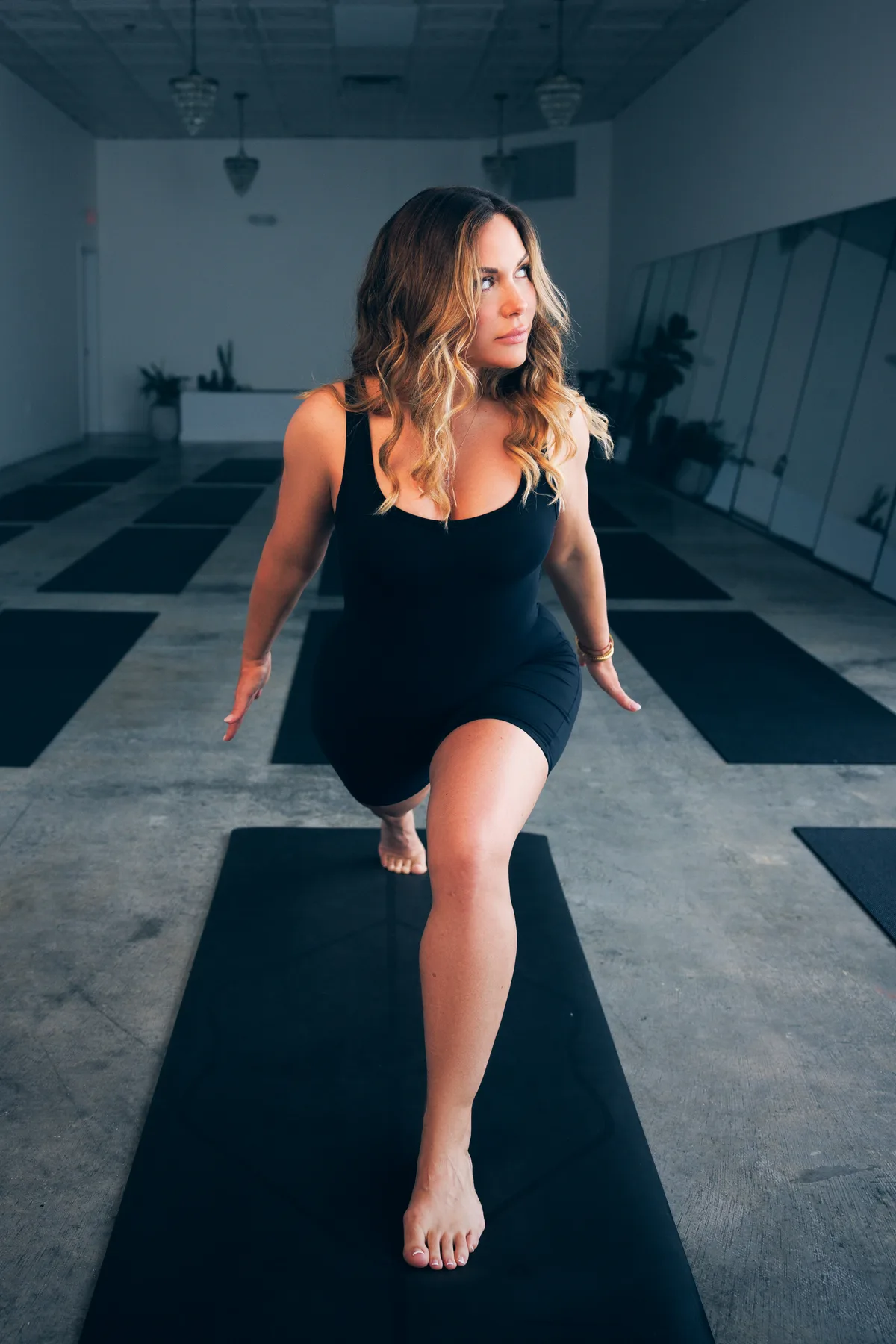
Identify what makes the exercise single-side
Some exercises move one arm while the other supports you. Others place one leg in a more demanding role while both feet remain on the floor. A split stance is therefore not the same task as balancing entirely on one leg. Ask which part of the movement the instructor wants you to emphasize.
ACE's exercise library includes separate descriptions for variations because the setup changes the demand. Do not assume that adding a balance challenge automatically improves a strength exercise. If the aim is a controlled row, stable support may help you practice it more clearly than a complicated stance that consumes all your attention.
Choose a manageable starting side and sequence
Follow the class instruction about whether to alternate repetitions or complete a set before changing sides. Both structures can be used, but they feel different. If you are practicing independently, choose one approach and keep it consistent long enough to understand the movement.
Avoid doing an unplanned extra set on the side that feels easier simply because it is more enjoyable. ACE's sample workout guidance includes completing the intended repetitions on both sides for exercises that require it. If the sides feel noticeably different, use that as a question for your instructor rather than inventing a complicated correction program from one session.
Make the setup comparable without forcing symmetry
Use the same basic instructions on each side: support position, intended range and movement pace. Take time to reset instead of twisting directly from one side into the other while holding a weight. A deliberate changeover makes it easier to notice what the exercise is asking.
The sides may not feel identical. That observation alone does not require forcing the same depth or load when control differs. Choose the manageable version and ask for feedback. Stop if the movement causes pain. The purpose of the comparison is to practice clearly, not to prove that both sides must look perfectly matched in every photograph or repetition.
Add resistance before unnecessary complexity only when appropriate
Once the basic variation is repeatable, discuss which progression serves the workout. More resistance, a longer range or less support each changes the task. A balance-heavy version may be useful for one goal and distracting for another. Keep the intention explicit rather than following a universal ladder toward instability.
ACE's programming guidance emphasizes adjusting movements to the participant and session goal. That means a supported version can remain the right choice even after it becomes familiar. You can make a controlled exercise more challenging without changing every aspect of its setup. Progress should still leave the movement recognizable enough to compare with previous practice.
Record the variation, not just the total
Write down whether the count was per side or combined. A note that says twelve rows is ambiguous if you cannot remember whether that meant six on each side or twelve each. Include the support or stance when it materially changes the exercise. Small details make later comparisons much more useful.
At LA Cycle + Yoga, ask about side changes before a timed strength round begins. The photo here illustrates a split stance, not a prescription to copy a specific load or range. Your next practice goal might simply be making the second side as deliberate as the first. Clear setup, manageable effort and an organized transition are enough to make single-side training a purposeful part of a broader workout.
Explore your next step
Sources & further reading
Practice at a manageable effort, stop movements that cause pain and ask your instructor to clarify unfamiliar exercises. Check the current schedule for class formats and availability.