
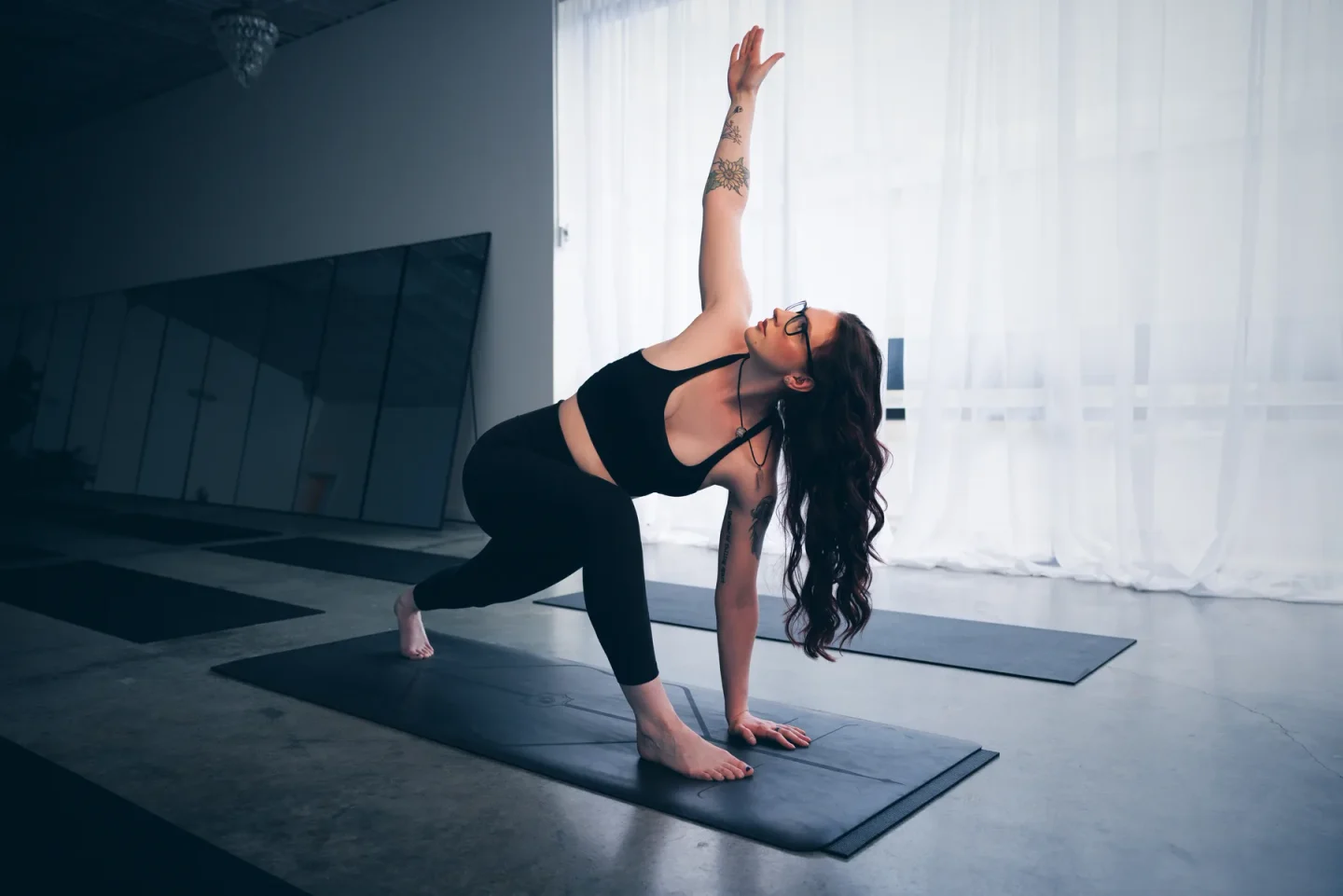
Listen for the destination before moving quickly
When an unfamiliar transition is introduced, watch enough of the demonstration to understand where you are going. Identify which hand or foot moves first and where support will come from. Guessing at speed can leave you in an awkward starting position for the next instruction.
It is reasonable to pause and rejoin the sequence at a familiar point. Ask the instructor which simpler route is available rather than improvising a complicated shortcut. A flow class can include different options, but the exact choices depend on the session. Check the class description and ask about expectations instead of assuming every format uses the same pace.
Make space on and around the mat
Position the mat so you can extend into the movements being taught without reaching into someone else's equipment. Keep a block or other offered prop within deliberate reach, not scattered where a foot is about to land. Arrange these details before the sequence begins whenever possible.
During a transition, look at the actual landing space rather than only at the instructor. If a step does not reach the intended position, adjust carefully before continuing. Taking an extra step or using the offered alternative can preserve control. The objective is a clear setup for the next pose, not making every transition appear seamless at any cost.
Choose a manageable version of the route
A smaller step, a supported position or an additional pause can make the sequence more understandable. Ask which variation fits the class. Do not assume the most dramatic transition is the required one or that repeating it faster will make an unclear movement easier to learn.
Stop any movement that causes pain. Keep attention on how you enter and leave a position, not only how far you reach once there. General exercise resources such as ACE's library show why specific movement instructions matter; they do not establish one universal yoga alignment or sequence. Use the instructor's explanation for the practice actually being taught.
Let the breath cue support rather than rush you
A flowing sequence may coordinate movement with breathing, but following the cue should not mean racing through a setup you do not understand. Ask how to simplify the sequence when the timing feels too quick. You can take a moment to organize the position and continue from a familiar point.
Notice whether you are holding your breath while trying to catch up. Reduce the complexity and return to a manageable rhythm. A slower transition does not have to become a long static hold; it can simply mean making each step deliberate. The purpose is continuity with control, not identical timing across everyone in the room.
Practice one transition as a skill
After class, identify a single transition you want clarified. Ask the instructor to explain it before repeating it independently. Breaking it into a starting position, a movement and a finish can make the next class less confusing. Avoid trying to memorize the entire sequence at once.
At LA Cycle + Yoga, the uploaded yoga photograph offers a view of studio practice, not a step-by-step tutorial or a guaranteed future class plan. Review current yoga options and choose a format that matches what you want to learn. A useful next goal is arriving in the following pose with a clear base and time to listen. The positions matter, but so does the controlled movement that connects them into a workout you can understand and repeat.
Explore your next step
Sources & further reading
Practice at a manageable effort, stop movements that cause pain and ask your instructor to clarify unfamiliar exercises. Check the current schedule for class formats and availability.